
























































Top 10 Safety Tips for Inflatable Rentals to Ensure a Fun and Secure Event
Safety must be the primary concern when using inflatable rentals. Bounce houses and slides deliver engaging entertainment, but improper setup or lack of oversight can cause serious injuries. This guide summarizes practical safety measures — covering setup, supervision, maintenance and emergency planning — so organisers can protect guests while keeping the event enjoyable. Using professional rental services can further simplify setup and strengthen safety controls.
Setup Guidelines
Correct setup reduces hazards and improves user experience. Place inflatables on a flat, level surface clear of debris or obstacles. Use appropriate anchors, such as stakes or sandbags, to secure units against movement. Allow sufficient clearance around the inflatable to prevent crowding and enable emergency access.
Hiring a professional service such as Clowns4Kids can help ensure equipment is installed to recognised safety standards. See Clowns4Kids for their rental and installation options.
What checklist should be followed before setting up a bounce house?
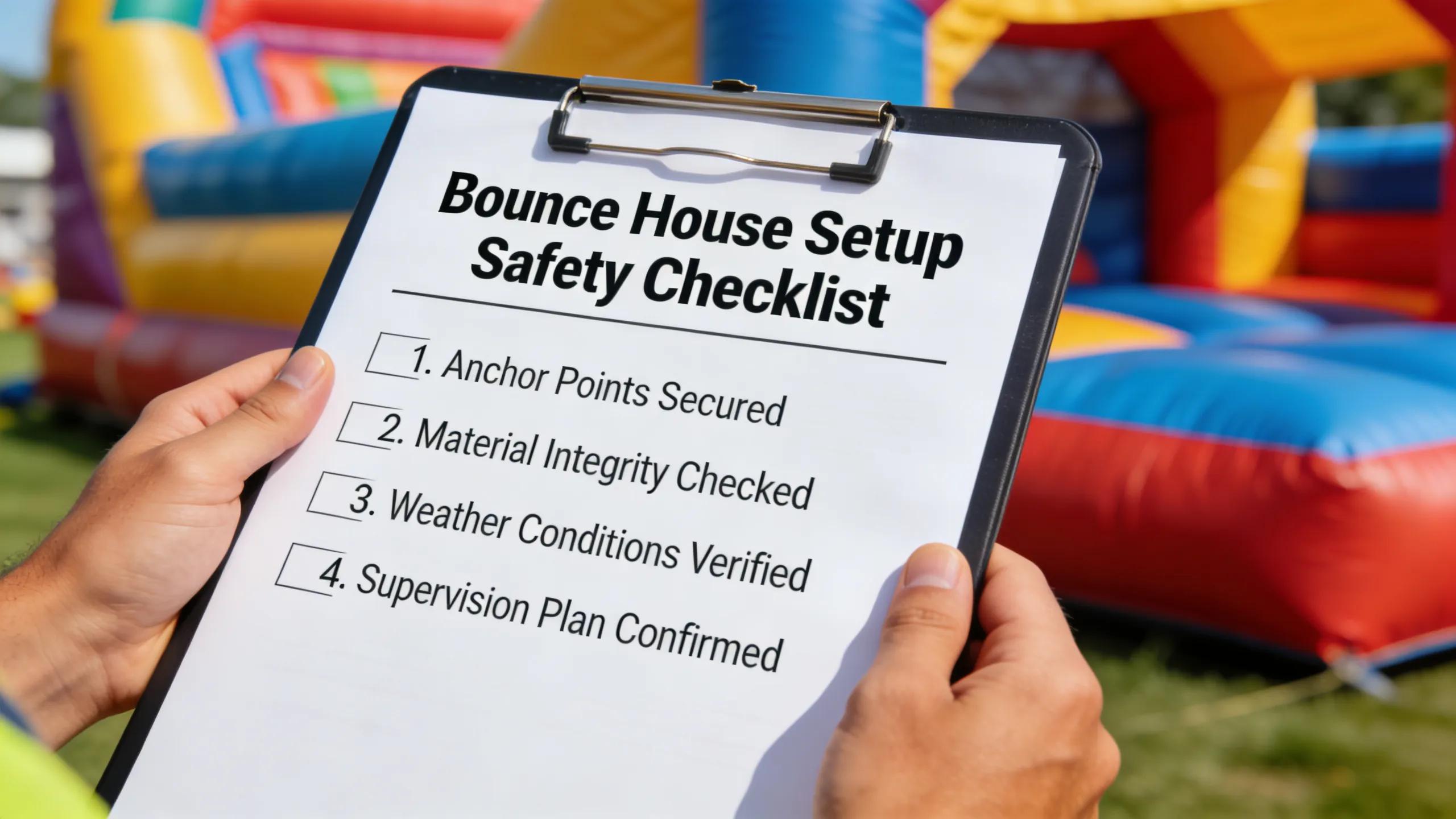
A concise, consistent checklist supports safe bounce house installation. Verify surface conditions, confirm anchors and weights are available, and establish clear safety perimeters before inflating the unit.
- Surface Evaluation: Ensure the installation site is flat, free of sharp objects, and well-drained.
- Anchor Inspection: Use quality anchors or weights to secure the inflatable against winds or movement.
- Safety perimeters: Maintain clear zones around the inflatable to prevent overcrowding and facilitate emergency access.
Following this checklist helps meet local safety requirements and reduces risk. If you need bounce house rentals in New York, professional providers can handle compliant setup — see bounce house rentals in New York.
Supervision
Active adult supervision is essential whenever children use inflatables. Trained adults enforce rules, monitor behaviour and intervene immediately if situations become unsafe. Set clear capacity and age guidelines based on each unit’s specifications.
Clowns4Kids offers experienced staff who can supervise activities and help maintain a safe environment for all guests.
Who should supervise children using inflatable rentals and what are their responsibilities?
Supervisors should be responsible adults familiar with safety procedures. Their duties include monitoring play, enforcing manufacturer capacity limits, and intervening promptly to prevent risky behaviour.
- Monitoring Activities: Ensure children follow safety rules, such as no roughhousing or flipping.
- Enforcing Capacity Limits: Follow the manufacturer’s guidelines on the number of users based on size and weight.
- Addressing Issues: Remain vigilant to intervene quickly if any unsafe behavior occurs.
Proper oversight reduces injuries and keeps play orderly. Professional clowns and entertainers can also help by engaging children while supervisors focus on safety — see professional clowns.
Maintenance
Regular inspections and maintenance are vital. Check inflatables for tears, punctures and seam damage before each use, and confirm blowers and electrical connections operate correctly.
Routine cleaning is also important. A clean inflatable reduces health risks and improves the guest experience.
What cleaning practices ensure hygienic and safe bounce house use?
Adopt consistent cleaning practices to maintain hygiene and safety: disinfect surfaces before events, inspect and clean after each use, and store units dry and ventilated to prevent mould.
- Pre-Event Cleaning: Wipe down surfaces with disinfectant before the event starts.
- Routine Inspections: Inspect seams and surfaces for wear and tear and clean thoroughly after each use.
- Safe Storage: Store inflatables properly to avoid mold and mildew, keeping them well-ventilated.
These measures preserve the inflatable’s condition and help protect users from injury or illness.
Electrical Safety
Electrical precautions are critical. Faulty wiring or improper connections can cause shocks or fires. Ensure all electrical equipment meets safety standards and that blowers are installed and operated according to manufacturer guidance.
Avoid using extension cords.
Extension cords can become tripping hazards and may not be rated for outdoor use. Provide a reliable power source rated for the blower’s requirements whenever possible.
Ensure dedicated electrical access.
Use a direct, dedicated power supply to reduce the risk of overloads and connection failures. Proper electrical setup lowers the chance of malfunctions during use.
Participant Conduct
Clear conduct rules improve safety and enjoyment. Define acceptable behaviour on inflatables, including movement restrictions and supervision requirements, and communicate these rules to all participants and guardians.
Establish clear participant rules.
Implement straightforward rules such as no rough play, adherence to age and weight limits, and mandatory adult supervision for younger children.
- No Rough Play: Prohibit tackling, flipping, or wrestling on the inflatable.
- Age and Weight Limits: Clearly communicate limits based on the inflatable’s specifications to ensure appropriate use.
- Supervised Play: Require adult supervision at all times, particularly for younger children.
Consistent enforcement of these rules lowers accident risk and helps maintain a controlled, safe environment.
Weather Considerations
Weather directly affects inflatable safety. Wind, rain and extreme heat can create unsafe conditions, so organisers must assess weather risks before and during the event.
What weather precautions should event organizers take when using inflatables?
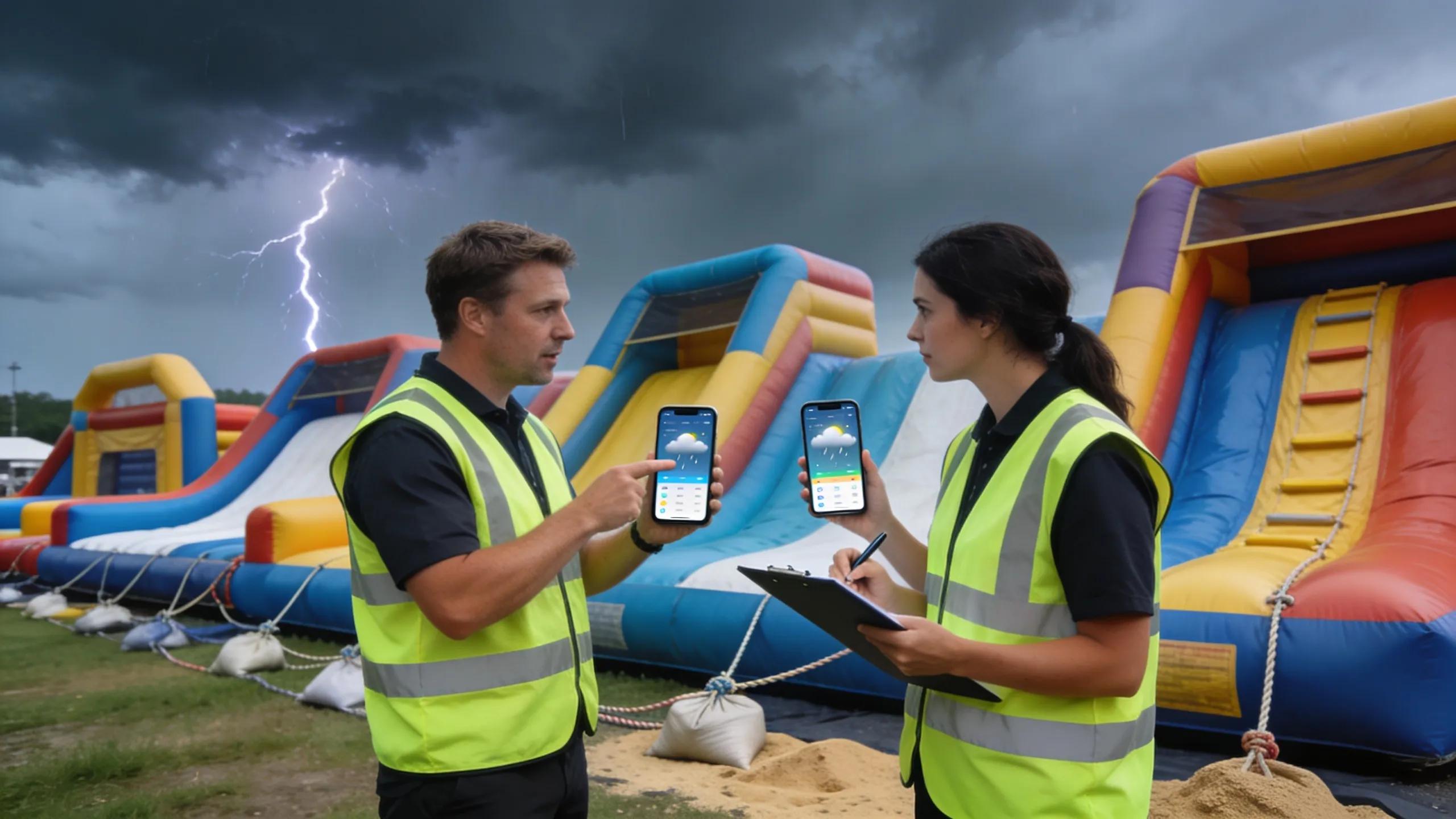
Manage weather risks by monitoring forecasts, planning for quick deflation if conditions worsen, and siting inflatables away from trees or structures that could create hazards in high winds.
- Monitor Weather Conditions: Regularly check forecasts leading up to the event, watching for severe weather warnings.
- Be Prepared to Deflate: Have a plan in place for quick deflation when severe weather is approaching.
- Set Up a Safe Buffer: Ensure that there is no setup of inflatables near trees or structures that may pose a risk in windy conditions.
These precautions help organisers respond quickly to changing conditions and protect participants from avoidable risks.
Emergency Preparedness
Planning for emergencies improves response and reduces escalation. Establish protocols for likely incidents and ensure staff understand their roles before the event begins.
What insurance policies cover inflatable rentals and event liability?
Organisers should obtain event insurance that covers inflatable rentals and provides liability protection for injuries or property damage. Confirm policy limits and coverage terms before the event.
How should emergencies and incidents be handled during inflatable use?
During events, ensure first aid kits are accessible, emergency procedures are communicated to staff, and a list of emergency contacts is available for quick reference.
- First Aid Kits are Accessible: Always have first aid kits readily available and know how to use the materials inside.
- Emergency Protocols are Established: Clearly communicate emergency procedures to supervisors and staff.
- Contact Information is Available: Maintain a list of emergency contacts, including local services.
Being prepared for emergencies protects participants and gives organisers confidence to manage incidents efficiently.
Frequently Asked Questions
What types of inflatable rentals are available for events?
Inflatable rentals cover bounce houses, slides, obstacle courses and water slides, plus specialised units like interactive games and sports arenas. Options vary by age group and event type, so choose units that suit participant ages and the event theme.
How do I choose a reputable inflatable rental company?
Evaluate providers by checking reviews, confirming licensing and insurance, and asking about maintenance and safety procedures. Also confirm whether staff provide on-site supervision. A reputable company will prioritise safety and customer service.
Can inflatable rentals be used indoors?
Yes — if the indoor space is large enough, has sufficient ceiling height and a smooth floor. Confirm with the rental company whether the unit is rated for indoor use and follow their setup recommendations.
What should I do if an inflatable rental gets damaged during the event?
Stop use immediately and assess the damage for safety risks. Contact the rental company for guidance; reputable providers typically have procedures for repairs, replacement or safe removal. Document the damage for insurance or liability purposes.
Are there age restrictions for inflatable rentals?
Age and weight limits depend on each unit’s design and manufacturer recommendations. Follow those guidelines to prevent overcrowding and avoidable accidents, and separate users by age or size when needed.
How can I ensure my inflatable rental is eco-friendly?
Choose suppliers that use sustainable materials and eco-friendly cleaning products, and look for energy-efficient blowers. Proper storage and handling between events also reduce waste and prolong the unit’s usable life.
What is the best way to secure an inflatable during windy conditions?
Use manufacturer-recommended anchors such as stakes, sandbags or specialised anchors, placed according to size and expected wind loads. Monitor wind speeds and be ready to deflate the unit if conditions exceed safe limits.
Conclusion
Prioritising safety for inflatable rentals protects participants and improves the event experience. Follow the guidelines on setup, supervision, maintenance and emergency planning to create a secure environment. Consider professional providers like Clowns4Kids to support compliant setup and staffing, and apply these practices to ensure a memorable, safe celebration.